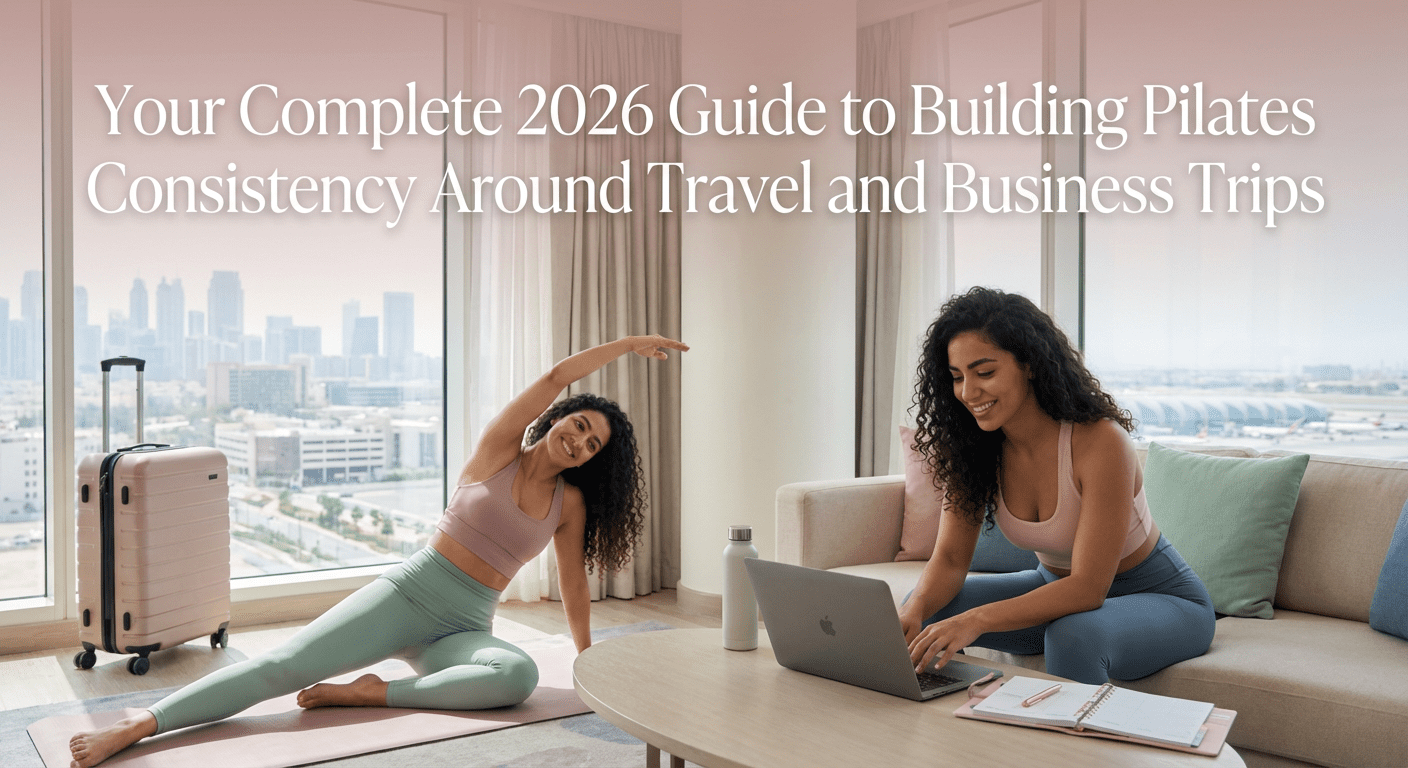
Building Pilates consistency around frequent travel requires choosing package validity periods that match your actual schedule, not ideal intentions. Extended validity options, like 120-day packages designed for professionals who travel between Gulf cities, eliminate the “use it or lose it” panic and support sustainable practice. This guide covers mapping your travel patterns, selecting the right package structure, and maintaining momentum through business trips without guilt or restart anxiety.
I bought a 30-day Pilates package three weeks before a work trip to Dubai. By the time I got back, adjusted to being home, and worked through the backlog of emails, I had five days left to use twelve classes. The math didn’t work. The panic did.
That cycle (commit, travel, lose classes, feel guilty, start over) repeated itself three times before I realized the problem wasn’t my willpower. It was the structure. If you’re reading this while mentally calculating whether you can squeeze in enough classes before your next trip, this one’s for you.
The Business Traveler’s Pilates Paradox
Here’s the contradiction: the people who need Pilates most (professionals dealing with flight-induced back pain, hotel bed stiffness, and stress from constant movement) are the same people who struggle most to maintain consistency. Not because they don’t want to, but because traditional package structures don’t account for their reality.
Most studios offer 30-day validity periods. This works perfectly if you’re in the same city for 30 consecutive days. But if you travel even once during that month (a week-long trip to Riyadh for meetings, a weekend in Bahrain, a two-week family vacation), you’re suddenly cramming classes into shortened windows or watching money expire unused.
The solution isn’t trying harder to “make it work.” It’s choosing a structure that actually fits how you live.
Understanding Your Real Travel Pattern (Not Your Ideal One)
Before buying any package, map your actual travel schedule for the past three months. Not what you wish it looked like, but what actually happened.
The Weekly Commuter
You’re in Jeddah Monday through Thursday, Dubai or Riyadh Friday through Sunday. You travel 2-3 times per month but are rarely gone for more than a few days at a time. Your challenge isn’t long absences; it’s the constant disruption to routine.
Best fit: Mid-range packages (12 classes) with 60-75 day validity. This gives you breathing room for weekly travel without the commitment pressure of larger packages.
The Monthly Traveler
You have one major trip per month, usually a week to ten days. When you’re home, you’re consistent. When you’re gone, you’re completely off routine. Your challenge is restarting after breaks without losing momentum.
Best fit: Larger packages (24 classes) with 90-120 day validity. The extended timeframe accounts for your travel weeks while still encouraging regular attendance when you’re in town.
The Seasonal Traveler
Your schedule is feast or famine. You’re incredibly consistent for 6-8 weeks, then gone for 2-3 weeks (Ramadan travel, summer family trips, Hajj season). Your challenge is the anxiety of losing all progress during long breaks.
Best fit: Maximum validity packages (120+ days) that span entire seasons. This removes the pressure to “use it before you lose it” and allows natural cycles of intensity and rest.
Why Extended Validity Changes Everything
The difference between 30-day and 120-day validity isn’t just math; it’s psychology. When your package expires in 30 days, every trip becomes a threat to your investment. You feel guilty for traveling. You panic-book classes before trips. You restart from zero when you return.
With extended validity, travel stops being the enemy of consistency. It’s just part of the rhythm.
KARVE Jeddah restructured their entire pricing model around this insight. Their packages range from 45-day validity (6 classes) to 120-day validity (24 classes), specifically designed for professionals whose lives involve regular travel. The 24-class package with 120 days gives you nearly four months to complete classes, enough time for multiple business trips, a family vacation, and the inevitable week when work explodes and you can’t make it to a single session.
This isn’t about being lenient. It’s about being realistic. Research on exercise adherence shows that flexible scheduling parameters significantly improve long-term consistency compared to rigid timeframes. When people feel they have “room to breathe” in their fitness commitments, they’re more likely to maintain practice over months and years rather than cycles of intense effort followed by complete dropout.
The GCC Professional’s Specific Challenges
If you’re working in Jeddah, your travel patterns probably include some combination of these:
Weekend trips to Dubai or Bahrain: Short but frequent. You leave Thursday night, return Saturday night. Your schedule is disrupted but not destroyed.
Regional business travel: Week-long trips to Riyadh, Abu Dhabi, or Doha. You’re in hotels with gyms but no Pilates reformers. You lose your routine but want to restart immediately when you return.
Seasonal family travel: Summer months abroad, Ramadan travel, extended breaks for Hajj. These are planned disruptions, but they still interrupt momentum.
The visa run: That twice-yearly trip out of the Kingdom that’s not really a vacation but still takes you away from your studio for 5-7 days.
Each of these creates a different challenge to consistency. Weekend trips test your ability to restart quickly. Regional business travel tests your patience with losing fitness gains. Seasonal travel tests whether you can pick up where you left off after weeks away.
The solution isn’t the same for everyone, but it starts with acknowledging that your schedule looks nothing like someone living in London or New York with a standard Monday-Friday office job and an annual two-week vacation.
Calculating Your Actual Attendance Rate
Here’s the exercise that changed how I approach packages: calculate your realistic attendance rate accounting for travel.
If you want to attend 2-3 classes per week (the recommended consistency level for results), that’s roughly 8-12 classes per month in a perfect world. But you don’t live in a perfect world. You travel.
Let’s say you travel one week per month. That cuts your available weeks from four to three. Now you’re looking at 6-9 classes per month, not 8-12. Over three months, that’s 18-27 classes, not 24-36.
So when you buy a 24-class package, you’re not buying one month of classes. You’re buying 2.5-3 months of classes when you factor in realistic travel disruptions. The 120-day validity suddenly makes perfect sense.
This is why the “classes per month” model breaks down for frequent travelers. You don’t have consistent months. You have patchwork schedules that vary wildly week to week.
Strategic Package Selection Based on Travel Frequency
If You Travel 1-2 Times Per Month
Choose: 12-class package with 60-75 day validity (KARVE offers 12 classes valid for 75 days)
Why: This gives you 2+ months to complete classes, accounting for your trips. You’re aiming for roughly 1.5-2 classes per week when you’re in town, which is sustainable around regular travel.
Realistic attendance: 6 classes one month (including a week-long trip), 6 classes the next month. Completed within the validity period without stress.
If You Travel 2-4 Times Per Month
Choose: 24-class package with 90-120 day validity (KARVE’s 24 classes valid for 120 days)
Why: Frequent short trips mean you need maximum flexibility. Four months gives you enough runway to hit your 2-3 classes per week average despite constant movement. You’re not panicking before every trip.
Realistic attendance: Some weeks you’ll make 3 classes, some weeks zero. Over four months, it averages out to consistent practice without the guilt spiral.
If You Have One Major Trip (3+ Weeks) Coming Up
Choose: Either complete a smaller package before you leave OR buy a large package with maximum validity to span your trip
Why: Don’t buy a 30-day package two weeks before a three-week vacation. Either get the 6-class intro pack (KARVE’s 6 classes with 45 days) and finish it before you leave, or commit to the 24-class pack (120 days) knowing you’ll use it after you return.
Realistic attendance: Front-load classes before departure or back-load after return. The extended validity means you’re not racing a clock while packing.
The Mental Game: Releasing “All or Nothing” Thinking
The biggest barrier to travel consistency isn’t the logistics; it’s the mindset. We think we need to go to class 2-3 times per week every single week, and when travel disrupts that, we feel like we’ve “failed.” So we quit entirely.
Here’s the reframe: consistency means returning, not perfection. If you attend regularly when you’re in town and restart quickly after trips, you’re consistent, even if your schedule has gaps.
Research shows that exercisers who view breaks as “part of the process” rather than “failures” were significantly more likely to maintain long-term adherence. People who practiced self-compassion after disruptions returned to regular activity faster and sustained it longer.
This is where extended validity becomes a psychological tool, not just a practical one. When you have 120 days to complete 24 classes, missing a week for a Dubai trip doesn’t feel catastrophic. You’re not “behind.” You’re just living your life.
Strategies for Different Travel Scenarios
Before Short Trips (3-7 Days)
Front-load if possible. If you have a Dubai weekend coming up, try to get one class in early in the week. This takes the pressure off when you return and keeps momentum alive even during the trip.
Don’t panic-book. If you can’t squeeze in a pre-trip class, that’s fine. You have the validity period. One missed week won’t erase progress.
After Short Trips (3-7 Days)
Book immediately. Don’t wait until you “feel ready” or have “caught up.” Book your first post-trip class for the day after you return or the next available slot. The longer you wait, the harder it gets to restart.
Expect to feel off. You’ll be tighter, weaker, less coordinated. This is normal after even short breaks. It doesn’t mean you’ve lost everything. It means you’re human.
Before Long Trips (2+ Weeks)
Assess your package honestly. If you have 8 classes left and you’re leaving for three weeks, you’re not going to finish them before departure. Accept this. Either use what you can without stress, or plan to resume after return if your validity period accommodates it.
Don’t buy a new package right before a long trip. This is the mistake I made repeatedly. Wait until you return and are actually ready to commit to regular attendance.
After Long Trips (2+ Weeks)
Give yourself one week. Don’t expect to jump back into 3 classes per week immediately. Your body needs time to readjust to the movement, especially after long flights or time zone changes.
Start with one class in week one. Two in week two. Back to your normal rhythm by week three. This graduated return prevents injury and makes the restart feel less daunting.
What Actually Happens to Your Progress During Travel Breaks
Let’s address the fear: “If I take two weeks off, will I lose everything?”
No. Here’s what research shows:
Strength decreases begin after approximately 2-3 weeks of complete inactivity for trained individuals. Research on detraining shows that after three weeks, trained athletes maintain most strength gains, with muscle thickness, strength, and performance remaining largely unchanged. If you’ve been doing Pilates consistently, a one or two-week break won’t significantly impact your strength. You might feel less coordinated in your first class back, but that’s neuromuscular adaptation, not strength loss.
Flexibility decreases more quickly but returns fast. You might feel tighter after a week away, especially after long flights. But flexibility rebounds within 2-3 sessions of returning to regular practice.
The mind-body connection is more durable than you think. Even after breaks, your body remembers movement patterns. The first class back might feel hard, but the second feels familiar again.
What you do lose during travel is momentum and habit. This is real. The hardest part of travel breaks isn’t physical regression; it’s the psychological barrier to restarting. This is why booking your first class back before you even leave for your trip can be so effective.
The Jeddah Advantage: Studios Built for Your Schedule
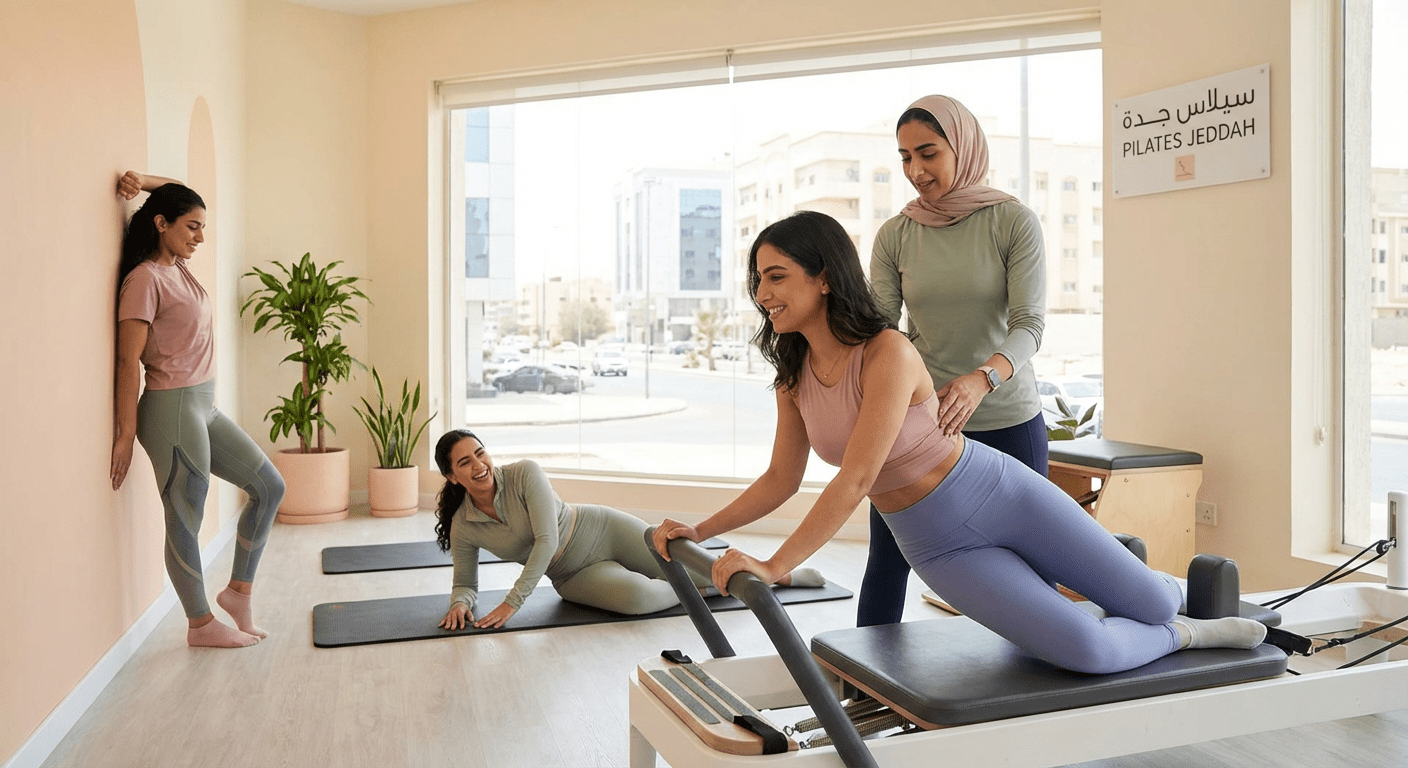
One advantage of practicing Pilates in Jeddah in 2026 is that studios here understand professional travel. Many clients work regionally or internationally. Extended validity isn’t a nice bonus; it’s a necessity.
KARVE Jeddah’s package structure, ranging from 45 to 120 days, reflects this understanding. When you buy the 24-class package with 120-day validity, you’re not just buying classes. You’re buying permission to have a real life that includes travel, family commitments, and unpredictable work schedules.
This matters more than you might realize. Knowing your classes won’t expire while you’re in Dubai for a conference removes one source of stress. You can actually focus on your trip instead of feeling guilty about unused classes.
Other Jeddah studios offer various validity periods, but the trend is clearly toward flexibility. Delight Pilates and TAMO both offer extended options recognizing that their clients aren’t stationary.
Building a Sustainable Travel-Friendly Pilates Practice
Here’s what sustainable consistency looks like for frequent travelers:
You attend 2-3 times per week when you’re in Jeddah. You don’t attend when you travel (unless you happen to find a studio, but you don’t stress if you don’t). You book your first class back within 48 hours of returning. You accept that some months you’ll do 10 classes and some months you’ll do 4. Over the course of a year, you average 2 classes per week.
That’s not perfect consistency. That’s real consistency. And research shows it’s enough to maintain progress, prevent injury, and see continued improvement over time.
Compare this to the “all or nothing” approach: Commit to 3 classes per week every week. Manage it for 6 weeks. Travel for work. Feel like you’ve failed. Quit entirely. Restart three months later. Repeat.
Which approach actually builds long-term practice?
Common Mistakes Travelers Make (and How to Avoid Them)
Buying packages right before major trips: Don’t do this. Either buy a small package you can finish pre-trip, or wait until you return to commit to a larger one.
Trying to “make up” for missed time: Coming back from a week away and trying to do 5 classes in 5 days to “catch up” is a recipe for burnout and injury. Just resume your normal schedule.
Letting perfection kill consistency: Missing your ideal 3-times-per-week schedule doesn’t mean you should give up and do zero classes. Two classes per week with travel disruptions beats zero classes because you’re frustrated with the disruption.
Ignoring your actual schedule: Buying a 30-day package when you travel every other week is setting yourself up for failure. Be honest about your travel frequency when choosing packages.
Guilt-driven booking: Panic-booking classes before trips because you feel bad about abandoning your classes creates stress and often leads to injury from rushed, unfocused sessions. Book strategically, not emotionally.
When to Choose Monthly Unlimited vs. Pay-Per-Class Packages
Unlimited monthly packages sound great in theory. In practice, they work well if you’re in the same city 25+ days per month and can attend 12+ classes. If you travel even moderately, you’ll likely end up paying more per class on an unlimited package than you would with a flexible pay-per-class package with extended validity.
Do the math based on your real attendance, not your aspirational attendance. If you realistically attend 8 classes per month (factoring in travel), a 12-class package with 75-day validity often costs less per class than paying monthly for unlimited.
The exception: If you have long periods of consistent attendance punctuated by major travel, monthly unlimited during your consistent months plus pausing during travel months can work. But this requires studios that allow easy pausing and resuming.
The 2026 Shift: Flexibility as the New Standard
As business travel continues to be a norm post-pandemic and more professionals work across multiple GCC cities, fitness studios are adapting. Extended validity periods, pause options, and flexible scheduling are becoming expected rather than exceptional.
The 2026 trend in Pilates is away from rigid “use it or lose it” models toward structures that acknowledge how people actually live. Studios that maintain 30-day expiration policies for all packages will increasingly struggle to retain professionals who travel regularly.
This is good news for consistency. When the structure supports your lifestyle rather than fighting against it, maintaining practice becomes significantly easier.
Your Action Plan for Travel-Proof Consistency
Map your travel for the next three months. Count the weeks you’ll be fully in Jeddah versus the weeks you’ll travel.
Calculate realistic attendance. If you want 2-3 classes per week when in town, multiply that by your actual available weeks (not total weeks).
Choose package size and validity to match. More travel equals longer validity needed. The package should feel spacious, not pressured.
Book your first post-trip class before you leave. This removes the activation energy needed to restart and keeps you accountable.
Track your actual pattern. After 2-3 months, review whether your chosen package structure is working or needs adjustment.
Adjust without judgment. If you consistently have classes expiring unused, you need longer validity, not more willpower.
The Bottom Line on Travel and Consistency
Travel doesn’t have to destroy your Pilates practice. But trying to maintain the same consistency through travel as you do when you’re home will make you miserable and likely lead to quitting entirely.
The solution is structural, not motivational. Choose packages that acknowledge your travel reality. Use extended validity periods not as “extra time” but as the baseline time you actually need. Release the guilt about imperfect attendance. Focus on the return, not the break.
When I finally bought a 24-class package with 120 days of validity, something shifted. I stopped feeling guilty about Dubai weekends. I stopped panicking before Riyadh trips. I started thinking of travel as just part of my routine, not a disruption to it.
My attendance didn’t magically increase. But my consistency over six months, a year, two years? That’s where everything changed. Because I stopped quitting. And not quitting, it turns out, matters more than perfection.
Frequently Asked Questions
Should I tell my studio I’ll be traveling when I buy a package?
Yes, especially if you’re choosing between package sizes. Many studios can help you select the right validity period based on your travel schedule. At KARVE Jeddah, for instance, staff can guide you toward the package structure that makes sense for your specific situation.
What if my package expires while I’m traveling?
This is why planning matters. If you know you have a three-week trip coming up and your package expires during that trip, either finish classes before you leave or choose a package with longer validity that spans your trip. Don’t put yourself in a position where classes expire while you’re physically unable to use them.
Is it worth trying to find Pilates studios while traveling?
This depends on trip length and your energy level. For short trips (under a week), most people find it adds stress rather than helps. For longer trips (2+ weeks), finding a drop-in class can help maintain the habit and ease the return. But don’t force it if you’re exhausted or dealing with time zone changes.
How do I restart after a month-long break without injury?
Start with one class in your first week back. Focus on relearning movement patterns rather than pushing intensity. Add a second class in week two. Return to your normal schedule by week three. This graduated approach prevents injury and rebuilds confidence.
What’s the longest break I can take without losing significant progress?
Research shows trained individuals maintain most strength gains for 2-3 weeks of complete rest. You’ll feel less coordinated in your first class back, but actual strength loss is minimal until the 3-week mark. Flexibility rebounds quickly within 2-3 sessions. The bigger concern is momentum, which is why booking your return class before you leave helps maintain psychological consistency.
Sources & References
- KARVE Jeddah. (2025). Class Packs & Memberships. https://karve.sa/en/buy/
- EINPresswire. (2025). How to Get Started with Reformer Pilates in Jeddah: KARVE’s Approach. https://www.einpresswire.com/article/873043714/
- Magnus S, Halonen T, Viero V, Ihalainen J, Taipale R. (2024). Does Taking a Break Matter: Adaptations in Muscle Strength and Size Between Continuous and Periodic Resistance Training. Scandinavian Journal of Medicine & Science in Sports. https://onlinelibrary.wiley.com/doi/10.1111/sms.14739
- Mujika I, Padilla S. (2000). Detraining: Loss of training-induced physiological and performance adaptations. Part I: Short term insufficient training stimulus. Sports Medicine, 30(2), 79-87.
- Zhang S, Roscoe C, Pringle A. (2023). Self-compassion and physical activity: The underpinning role of psychological distress and barrier self-efficacy. International Journal of Environmental Research and Public Health, 20(2), 1480. https://pmc.ncbi.nlm.nih.gov/articles/PMC9859314/
- Magnus S, et al. (2021). Self-Compassion and Reactions to a Recalled Exercise Lapse: The Moderating Role of Gender-Role Schemas. Journal of Sport and Exercise Psychology, 43(6), 477-488.

Leave a Reply