
Saudi Arabia’s fitness talent exchange reverses the flow, with Saudi instructors from KARVE Jeddah leading Pilates classes in London amid Vision 2030’s $19.8 billion wellness economy. Government programs, streamlined visas, and studios like KARVE drive import, training, and export of talent. This elevates local standards, ensures safer workouts, and positions KSA as a GCC fitness exporter.
Wondering why Pilates classes in Jeddah are filling up with international instructors from places like Australia and New York? Local studios like KARVE are scrambling for top talent amid a massive wellness boom. This article uncovers Vision 2030’s role, visa pathways, and growth stats, so you know exactly what it means for your practice.
What Is Saudi Arabia’s Emerging Fitness Talent Exchange?
For years, the fitness narrative in the Middle East was one-directional: international brands imported foreign talent to teach locals. But as of late 2025, the script has flipped. We are witnessing a true talent exchange—a bidirectional flow where Saudi expertise is now being exported to global wellness hubs.
This isn’t just about bringing big names to Riyadh or Jeddah anymore. It is about Saudi-trained instructors reaching a level of proficiency where they are leading classes in cities like London. The exchange is driven by a maturing market that demands high standards, creating a pipeline where local talent is identified, certified to international levels, and given the platform to shine globally. It’s a sign that the Kingdom’s fitness scene has graduated from “emerging” to established.
Vision 2030: The Blueprint Fueling Fitness Growth
The numbers backing this shift are staggering. Under Vision 2030, the government isn’t just encouraging exercise; they are building an entire economy around it. The goal has been to increase physical activity, and the infrastructure is catching up fast.
Key market drivers include a wellness economy valued at over $19.8 billion, government initiatives prioritizing preventative health, and rapid construction of community sports facilities.
This top-down support has created a fertile environment for growth. The wellness industry in Saudi Arabia is experiencing remarkable growth, with wellness tourism alone posting a 66% average annual growth rate from 2020-2022 according to the Global Wellness Institute. This creates an urgent need for talent—both imported mentors to set the standard and local practitioners ready to take the baton.
Women’s Wellness Boom: Demand for Specialized Instructors
The most exciting growth is happening in women’s wellness. There is a massive appetite for female-only spaces that offer high-end, effective training without compromising privacy or cultural values. This sector is growing faster than the general market, driven by women who want more than just a treadmill—they want community and specialized methods like Reformer Pilates.
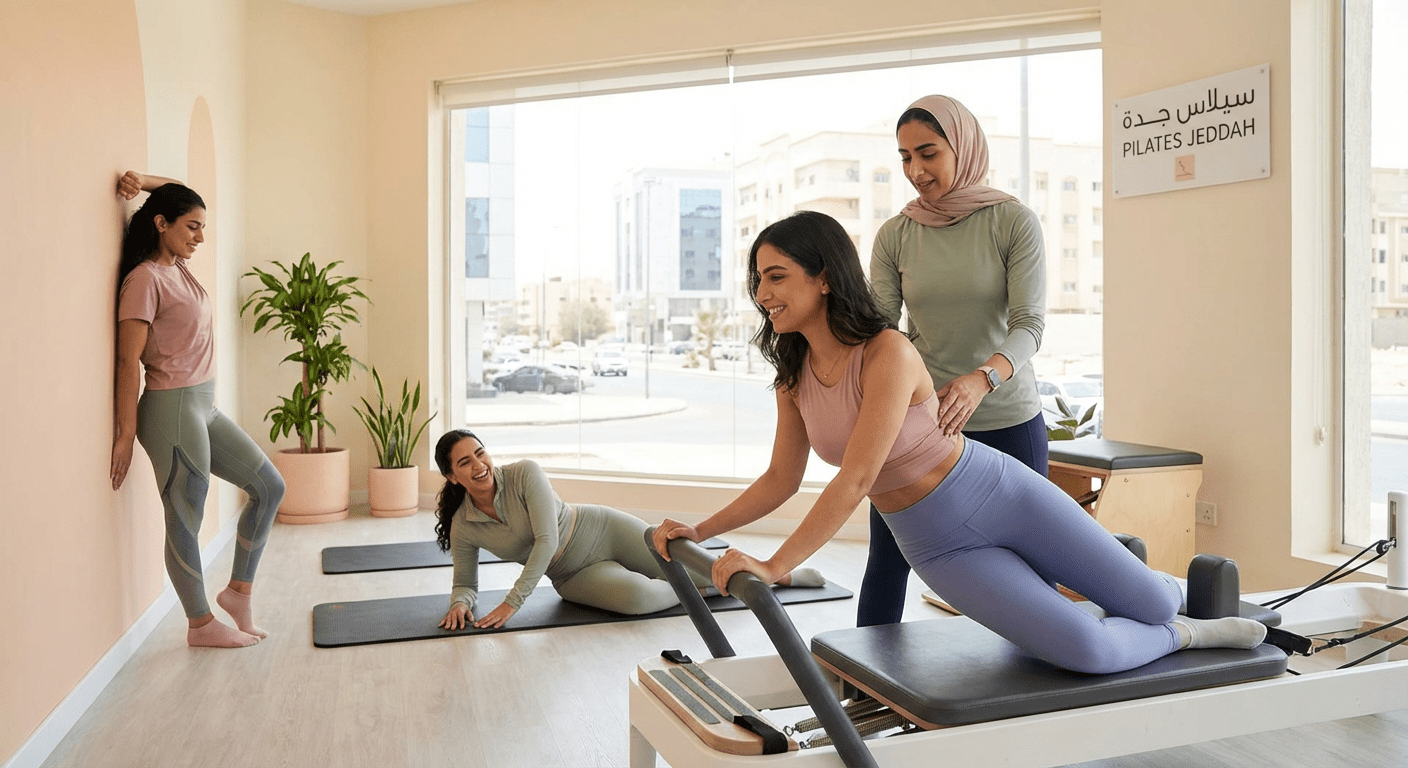
Studios are responding by creating environments that feel like sanctuaries. KARVE Jeddah, for example, opened specifically as a women-only Transformer Pilates studio to meet this exact need. The demand is so high that studios are constantly hunting for instructors who understand both the technical biomechanics of Pilates and the cultural nuances of teaching in Saudi Arabia.
International Studios Importing Global Expertise
When global brands land in Saudi Arabia, they bring more than just branded equipment; they bring a methodology. The initial phase of this exchange involves importing seasoned professionals to establish the baseline quality. These experts act as the seed for the local ecosystem, training the first generation of Saudi instructors.
“When we opened in Jeddah last year, we brought the KARVE method from London to Saudi Arabia. Now our instructors are teaching in London.” – KARVE studio representative
This transfer of knowledge is critical. It ensures that a class in Jeddah feels exactly like a class in New York or London. However, the smart studios know that importing talent is just the starting line, not the finish line.
KARVE Jeddah’s Role in the Mix
KARVE Jeddah has become the prime case study for this successful exchange. In late 2025, they didn’t just host guest trainers; they sent their own Saudi instructors to the UK. Lojain Alrefae, a Saudi national, taught at KARVE Kensington, while her colleague Samar led sessions at KARVE Chelsea.
This is a milestone. It proves that the talent developed right here in Jeddah is on par with global standards. It validates the quality of training available locally and shows that Saudi instructors can command a room in one of the world’s most competitive fitness markets.
Government Programs Training and Attracting Local Talent
The Saudi government is actively bridging the skills gap to ensure locals can fill these new roles. Through the Ministry of Sport and the Quality of Life Program, there is a concerted effort to professionalize fitness careers. It’s no longer seen as just a hobby; it’s a viable career path supported by state-sponsored training and certification initiatives.
Recent government-aligned moves include hosting massive expos like FIBO Arabia to showcase standards, youth exchange programs with countries like Morocco, and emphasizing skills-first frameworks for workforce development.
These programs aim to reduce reliance on foreign labor eventually, but for now, they facilitate a healthy mix where knowledge transfer is the priority. The goal is clear: empower Saudi youth to become the leaders of the wellness sector.
How the Fitness Talent Exchange Works
The mechanism behind this exchange is a mix of policy, corporate strategy, and individual ambition. It operates on a cycle: experts come in, knowledge is transferred, and then local talent rises up and branches out.
Here is the basic flow: Import—Global experts establish standards. Train—Intensive certification of local talent. Export—Saudi instructors gain experience abroad. Reintegrate—Instructors return with global insights.
Visa Pathways and Work Permits for Instructors
Recent reforms have streamlined the process for bringing in specialized fitness talent. New visa categories allow highly skilled trainers to enter the Kingdom more easily, facilitating that initial knowledge transfer. Conversely, for Saudi nationals like Lojain and Samar, travel visas for professional development are becoming smoother, supported by the credibility of the international brands they represent.
Certification Exchanges and Saudization Efforts
To make the exchange work, certifications must translate across borders. We are seeing a push for “Saudization” in fitness, where local certifications are being aligned with international bodies like the Pilates Method Alliance. This ensures that a certification earned in Riyadh holds weight in London, and vice versa. It raises the floor for quality across the entire region.
Studio Partnerships Bridging Local and Global Talent
The business structure often involves a local operator partnering with a global brand. For instance, KARVE Jeddah is operated by ALFMILE Co, a Saudi company. These partnerships are the bridge. The local partner provides the market access and cultural insight, while the global brand provides the training curriculum and quality control. This synergy is what makes the talent exchange practically possible.
Best Practices for Studios Embracing the Exchange
For this ecosystem to thrive, studios need to be intentional. You cannot simply drop a foreign instructor into Jeddah and expect magic, nor can you send a Saudi instructor abroad without preparation.
Successful studios focus on structured mentorship by pairing international leads with local apprentices, cultural onboarding by teaching expats about local customs and expectations, and standardized curriculums to ensure the method is identical regardless of location.
Vetting International Instructors Effectively
When bringing talent into the Kingdom, technical skill is only half the battle. Studios must vet for cultural intelligence. The best instructors are those who respect the local values while gently pushing boundaries in fitness. They need to be adaptable, patient, and genuinely interested in developing the clients, not just delivering a routine.
Upskilling Saudi Practitioners for Long-Term Success
The long-term win lies in investing in local talent. This means going beyond a weekend workshop. It requires funding comprehensive teacher training (450+ hours), sponsoring trips to global HQs, and providing continuous education. When studios invest in their Saudi team, they get loyalty and a depth of connection with the client base that foreign instructors often struggle to build.
Common Mistakes Derailing Talent Integration
Despite the successes, I’ve seen studios get this wrong. The most common error is segregation—keeping international staff separate from local staff, creating a two-tier system that breeds resentment.
Avoid these pitfalls: pay disparity by paying expats significantly more for the same work, lack of career path by failing to show Saudi instructors how they can advance, and ignoring language barriers by not providing support for bilingual instruction.
If the “exchange” feels one-sided, it fails. The goal must always be mutual growth and respect between the visiting experts and the resident talent.
Why Pilates Enthusiasts in Jeddah Should Care
You might wonder, “I just want a good workout, why does this matter?” It matters because better instructors mean better results for you.
When your instructor has trained with the best in London or has been vetted against global standards, you are safer. You are less likely to get injured and more likely to see the physical changes you want. Furthermore, seeing Saudi women like Lojain and Samar succeed on the global stage is incredibly motivating. It reminds us that the work we do in the studio here in Jeddah is part of a larger, global movement of women getting stronger.
The Future of Saudi Arabia’s Fitness Talent Scene
Looking ahead to 2026 and beyond, the talent exchange will likely evolve into medical integration. We are already seeing moves toward clinical Pilates, where instructors work alongside physical therapists.
What to expect next: More Saudi instructors specializing in rehab and pre/post-natal care, increased use of AI and wearables to track progress requiring tech-savvy trainers, and Saudi Arabia becoming a net exporter of fitness talent to the wider GCC region.
The foundation has been laid. The exchange is working. Now, it’s about scaling it up and ensuring that Saudi Arabia isn’t just a consumer of fitness trends, but a creator of them.
Frequently Asked Questions
How can Saudi instructors get certified for international fitness teaching?
Saudi instructors pursue certifications aligned with global bodies like the Pilates Method Alliance through government programs via the Ministry of Sport. Programs require 450+ hours of training, often sponsored by studios like KARVE Jeddah, enabling work visas for UK sessions.
What visa options exist for foreign fitness instructors in Saudi Arabia?
Specialized Premium Residency visas and work permits under recent reforms allow skilled trainers entry for up to 1 year, renewable. These facilitate knowledge transfer, with streamlined processes via the Ministry of Human Resources for studios in Jeddah.
How does Saudization impact fitness studios in Jeddah?
Saudization mandates encourage local hiring in fitness, with targets around 25-40% by 2026. Studios like KARVE Jeddah comply by upskilling nationals through ALFMILE partnerships, blending local talent with expats for sustainable growth.
What training programs does the Quality of Life Program offer for fitness careers?
The Quality of Life Program funds certifications in Pilates and wellness via Ministry of Sport initiatives. Jeddah residents access workshops at community facilities, prioritizing women’s programs for Mecca Region youth.
Are there fitness instructor jobs available abroad for Saudis from Jeddah?
Yes, KARVE Jeddah instructors like Lojain Alrefae teach at London studios via brand partnerships. Opportunities grow through FIBO Arabia expos and youth exchanges with Morocco, with professional travel visas becoming more accessible.
Sources & References
- Global Wellness Institute. (2024). Saudi Arabia’s $19.8 Billion Wellness Economy. https://globalwellnessinstitute.org/press-room/press-releases/gow-saudi-arabia/
- OpenPR. (2024). KARVE Jeddah Instructors Lead Classes at London Studios. https://www.openpr.com/news/4303174/karve-jeddah-instructors-lead-classes-at-london-studios-as-saudi
- ALFMILE Co. (2025). About KARVE Jeddah. https://www.alfmile.co/
- Saudi Vision 2030. Quality of Life Program. https://www.vision2030.gov.sa/
Leave a Reply