
If you’ve been following the wellness scene in Saudi Arabia, you’ve probably noticed something interesting: physiotherapy is moving out of hospital basements and into mainstream fitness centers. But where does Pilates fit into this evolution?
As someone who practices Pilates regularly in Jeddah, I’ve watched the landscape shift dramatically. While we don’t yet have formal Pilates-hospital partnerships in the Kingdom, the groundwork is being laid through massive physiotherapy initiatives—and Pilates practitioners should be paying attention.
What’s Actually Happening: The PhysioTherabia Model
In October 2023, Burjeel Holdings and Leejam Sports Company (Fitness Time) launched PhysioTherabia, a joint venture creating advanced physiotherapy, rehabilitation, and wellness centers inside gym facilities. The first four centers opened in Riyadh, with plans to expand to 60 locations across the Kingdom by the end of 2025.
As of March 2024, PhysioTherabia had grown to 12 centers across Riyadh, Jeddah, Dammam, Yanbu, and Al Khobar. By October 2024, the network reached 28 centers spanning Riyadh, Medina, Jeddah, Dammam, Al Khobar, Yanbu, Tabouk, Taif, and Al Jubail—making it the fastest-growing physiotherapy network in Saudi Arabia.
The model is simple but revolutionary: place clinical rehabilitation services directly inside fitness facilities, allowing patients to transition seamlessly from medical treatment to ongoing wellness maintenance.
Why This Matters for Pilates
PhysioTherabia’s explosive growth demonstrates that Saudi Arabia’s healthcare system is ready to integrate movement-based therapies into mainstream medical care. The infrastructure being built for physiotherapy creates a natural pathway for Pilates to follow.
The Pilates Method Alliance, which tracks Pilates industry development globally, noted in 2024 that “some clinics have started incorporating Pilates spaces within their premises” across the Middle East, “recognizing its benefits for post-rehabilitation practices.” While they don’t cite specific Saudi examples, the trend is clear: the connection between medical industry and Pilates professionals “is in its nascent stages but growing steadily.”
The Gap Pilates Could Fill
PhysioTherabia offers comprehensive rehabilitation services including musculoskeletal rehabilitation, sports injury treatment, and spinal care. But there’s a critical gap between acute rehabilitation and long-term wellness maintenance—exactly where Pilates excels.
Traditional physiotherapy focuses on restoring function after injury or surgery. Pilates, with its emphasis on controlled movement, core stability, and body awareness, bridges the space between “recovered enough to leave physical therapy” and “strong enough to prevent re-injury.”
What Would Formal Integration Look Like?
Based on the PhysioTherabia model and international examples of medical-fitness integration, future Pilates partnerships in Saudi Arabia might include:
Referral Pathways: Physicians and physiotherapists referring patients to certified clinical Pilates instructors for post-rehab strengthening
Co-Located Spaces: Pilates studios within or adjacent to physiotherapy centers, similar to how PhysioTherabia operates within Fitness Time facilities
Shared Electronic Records: Communication systems allowing physiotherapists and Pilates instructors to coordinate patient care
Insurance Recognition: Health insurance coverage for prescribed Pilates sessions, similar to PhysioTherabia’s partnership with Tawuniya insurance
The Cultural Fit in Saudi Arabia
Pilates is particularly well-suited to Saudi Arabia’s healthcare evolution for several reasons:
Women-Only Options
The Pilates industry in the Middle East has naturally adapted to cultural preferences. According to the Pilates Method Alliance, “many studios are female-only, reflecting cultural sensitivities.” This alignment makes Pilates an ideal candidate for medical integration in the Kingdom, where PhysioTherabia already operates separate facilities for men and women.
Low-Impact, High-Benefit
Pilates offers rehabilitation benefits without the high-impact stress of traditional gym workouts. For a population dealing with rising obesity rates and sedentary lifestyles, this gentler approach to movement is medically appealing.
Alignment with Vision 2030
Saudi Arabia’s wellness economy was valued at $19.8 billion in 2022, with the physical activity sector specifically growing at 16.6% annually from 2020-2022, according to the Global Wellness Institute. The government’s Vision 2030 initiative explicitly prioritizes health and wellness, creating policy support for integrating movement therapies into healthcare.
Current State of Pilates in Saudi Arabia
The Kingdom has seen significant growth in boutique Pilates studios over the past five years. Major cities now host multiple dedicated facilities:
In Riyadh, studios like Formé Wellness, Sculptō, Stance, and Club Pilates offer reformer-based classes. Jeddah has established spaces including KARVE and Delight Pilates. Al Khobar features Curva Pilates and Flex Studio, which also has locations in Riyadh.
These are standalone fitness businesses, not medical partnerships. But they’ve built the foundation: trained instructors, established client bases, and demonstrated demand for Pilates in the Saudi market.
Barriers to Medical Integration
Despite the promising landscape, several obstacles currently prevent formal Pilates-hospital partnerships:
Certification Gaps
Clinical Pilates requires specialized training beyond standard instructor certification. Practitioners need understanding of pathology, contraindications, and medical protocols. Saudi Arabia’s physiotherapy sector has clear professional standards through the Saudi Physical Therapy Association, but equivalent clinical Pilates certifications aren’t yet widely recognized in the Kingdom.
Perception Issues
The Pilates Method Alliance notes that in the Middle East, “it remains a common belief among local males that Pilates is either a discipline tailored for women or simply a form of stretching.” This perception limits institutional buy-in from hospital administrators and insurance providers who may not understand Pilates’ rehabilitation potential.
Regulatory Framework
PhysioTherabia operates under clear healthcare regulations with oversight from medical professionals. Pilates studios currently function as fitness businesses without medical governance. Bridging this gap would require new regulatory frameworks defining clinical Pilates practice standards.
What Needs to Happen Next
For Pilates to follow physiotherapy’s path into Saudi medical integration, several developments are necessary:
Professional Standardization
Establishing recognized clinical Pilates certifications that meet Saudi healthcare standards. This might involve partnerships with international bodies like the Pilates Method Alliance and alignment with the Saudi Physical Therapy Association’s professional framework.
Evidence-Based Practice
Building Saudi-specific research demonstrating Pilates outcomes for common conditions treated in Kingdom hospitals. PhysioTherabia’s model works because physiotherapy has decades of clinical evidence. Pilates needs comparable local data.
Pilot Programs
Small-scale trials integrating Pilates into existing physiotherapy pathways. Starting with post-rehabilitation programs for specific conditions—spinal issues, post-surgical recovery—could demonstrate value before broader implementation.
Insurance Advocacy
PhysioTherabia partnered with major insurers including Tawuniya, Malath Insurance, and Gulf Insurance. Pilates studios would need similar relationships, which requires demonstrating medical necessity and cost-effectiveness to insurance providers.
Learning from PhysioTherabia’s Success
The PhysioTherabia expansion offers a blueprint for how Pilates could integrate into Saudi healthcare:
Start with Strategic Partnerships: Burjeel Holdings brought medical credibility while Leejam Sports provided infrastructure and reach. Pilates studios might partner with established physiotherapy networks rather than approaching hospitals independently.
Leverage Existing Infrastructure: PhysioTherabia didn’t build standalone clinics; they embedded into existing fitness facilities. Pilates integration could similarly utilize spaces already built by networks like PhysioTherabia.
Scale Systematically: PhysioTherabia opened 4 centers, validated the model, then expanded rapidly to 28 locations in one year. This phased approach allows for refinement before major investment.
Prioritize Insurance Coverage: Early partnerships with insurance providers made PhysioTherabia services accessible to broader populations. Pilates needs similar coverage to become more than a luxury service.
The Opportunity for Jeddah Studios
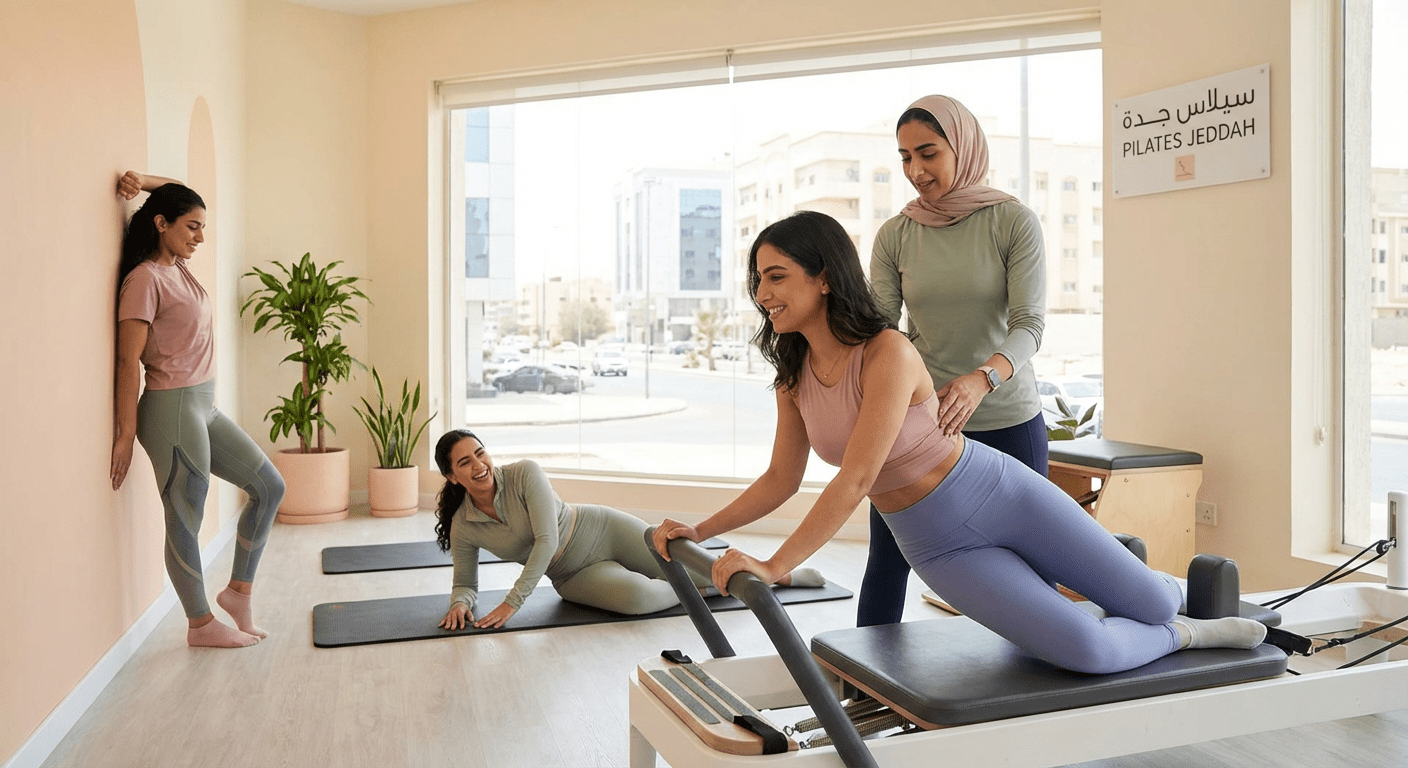
Jeddah’s Pilates scene is positioned to lead this evolution. The city already hosts PhysioTherabia locations at Al Salehiyah Male Gym and Taiba PRO Fitness Time, creating natural partnership opportunities.
Boutique studios in Jeddah could explore relationships with these existing medical-fitness hybrids, offering specialized post-rehabilitation Pilates programs that complement PhysioTherabia’s acute treatment services.
The key is positioning Pilates not as competition to physiotherapy, but as the next step in the recovery continuum—a bridge between medical treatment and independent wellness.
International Examples Worth Studying
While Saudi Arabia doesn’t yet have formal Pilates-hospital partnerships, international models demonstrate what’s possible:
Some Western healthcare systems include clinical Pilates within physiotherapy departments, with practitioners holding dual certifications. Insurance coverage for prescribed Pilates sessions exists in certain markets, though it remains limited.
The Middle East’s rapid adoption of wellness innovations suggests the Kingdom could leapfrog gradual integration seen elsewhere, moving directly to comprehensive medical-fitness models if the right partnerships form.
What This Means for Pilates Practitioners
If you’re a Pilates instructor or studio owner in Saudi Arabia, PhysioTherabia’s trajectory should prompt strategic thinking:
Invest in Clinical Training: Additional certifications in rehabilitation, anatomy, and medical protocols will become increasingly valuable
Build Healthcare Relationships: Network with physiotherapists, orthopedic specialists, and sports medicine doctors who might become future referral partners
Document Outcomes: Track client progress systematically to build evidence for Pilates effectiveness in Saudi populations
Watch the Insurance Space: PhysioTherabia’s insurance partnerships demonstrate that medical coverage for wellness services is possible in the Kingdom
The Timeline: When Might This Happen?
Realistically, formal Pilates-medical integration in Saudi Arabia is a 3-5 year horizon, not an immediate development. PhysioTherabia launched in 2023 and is still expanding its core physiotherapy offerings. Pilates integration would likely come after this primary network is fully established.
However, informal partnerships could emerge sooner. Individual physiotherapists referring patients to trusted Pilates instructors, co-marketing arrangements between PhysioTherabia locations and nearby studios, or pilot programs at forward-thinking facilities might appear within 1-2 years.
The Pilates Method Alliance’s observation that medical-Pilates connections in the Middle East are “in nascent stages but growing steadily” suggests momentum is building, even if formal structures lag behind.
Why I’m Optimistic
Despite current barriers, several factors make me believe Pilates-medical integration in Saudi Arabia is not just possible but likely:
Proven Demand: Saudi Arabia’s $19.8 billion wellness economy and 16.6% annual growth in physical activity demonstrates appetite for movement-based health solutions.
Infrastructure Investment: PhysioTherabia’s rapid expansion from 4 to 28 centers in one year shows massive capital flowing into medical-fitness integration.
Cultural Alignment: Women-only Pilates studios naturally fit Saudi healthcare preferences, removing a major cultural barrier to adoption.
Government Support: Vision 2030’s health and wellness priorities create policy environment favorable to innovative healthcare delivery models.
International Precedent: The Middle East has demonstrated ability to rapidly adopt wellness innovations, often faster than Western markets.
Final Thoughts
We don’t yet have Pilates-hospital partnerships in Saudi Arabia. But we have something potentially more valuable: a working model for medical-fitness integration that’s expanding rapidly, a thriving boutique Pilates industry, and a cultural and economic environment ready for innovation.
PhysioTherabia’s success proves that Saudi Arabia’s healthcare system will embrace movement therapies when they’re delivered professionally, integrated thoughtfully, and supported by insurance coverage. Pilates practitioners who position themselves strategically now—building clinical credentials, forming healthcare relationships, documenting outcomes—will be ready when those partnership opportunities emerge.
For those of us practicing Pilates in Jeddah and across the Kingdom, this isn’t just about growing the industry. It’s about ensuring more people have access to movement-based healing, reducing the gap between medical treatment and sustainable wellness, and building a healthcare system that values prevention as much as cure.
The infrastructure is being built. The question is whether Pilates practitioners will be ready to step into it.
Sources & References
Burjeel Holdings. (2023). Burjeel Holdings and Leejam Sports Company Open Four Premier Physiotherapy Centers in Saudi Arabia through Joint Venture. https://burjeelholdings.com/news/
PhysioTherabia. (2024). Burjeel Holdings and Leejam Sports Company Launch Eight New PhysioTherabia Centers in Saudi Arabia. https://physiotherabia.com/news/
Zawya. (2024). Burjeel Holdings expands PhysioTherabia to 28 Centers in Saudi Arabia. https://www.zawya.com/en/press-release/companies-news/
Pilates Method Alliance. (2024). The Pilates Industry in the Middle East. https://www.pilatesmethodalliance.org/blog/
Global Wellness Institute. (2024). Saudi Arabia’s Wellness Economy. https://globalwellnessinstitute.org/press-room/press-releases/
Arab News. (2023). Burjeel, Leejam Sports launch ‘PhysioTherabia’ centers. https://www.arabnews.com/node/2396476/corporate-news
Saudi Gazette. (2024). Burjeel Holdings and Leejam Sports Company launch eight new PhysioTherabia centers in Saudi Arabia. https://saudigazette.com.sa/article/640902

Leave a Reply